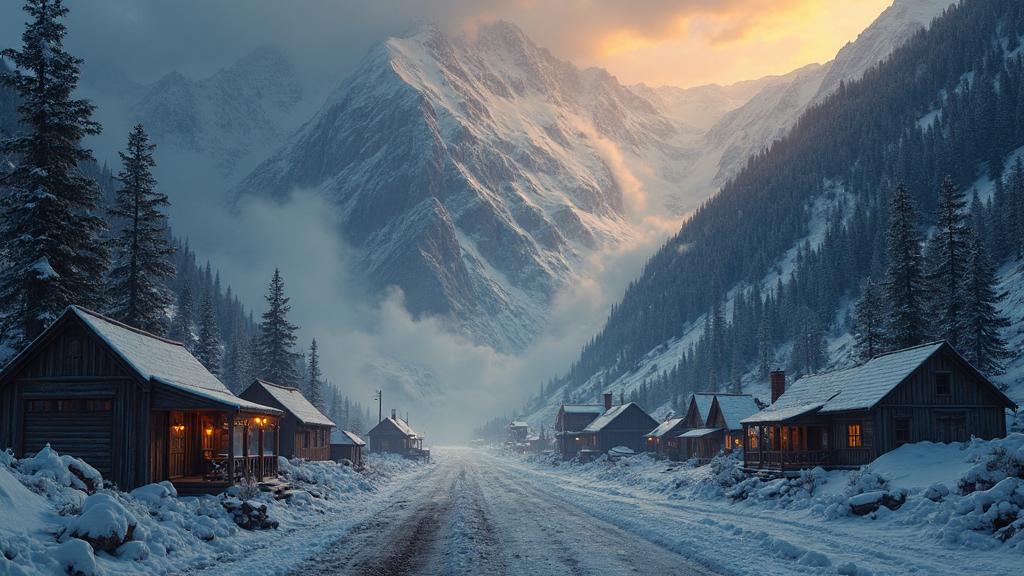
The starting place for this story is, of course, the avalanches (snow slides) that swept down from the tops of the mountain just north of the small town of Woodstock Colorado, directly on to the town at about 6:30 pm on the evening of March 10th, 1884. The town of Woodstock sat at an altitude of about 10,379 ft. (Google Earth shows it as 10,698 ft.).
The many facts and events of that fateful day, and the days that followed, have already been very well documented by a number of other people. However, I will add several things and restate some other things – even if they might be somewhat redundant.
The town of Woodstock was a small but thriving mining community nestled in the mountains of Colorado. Like many mining towns of the era, it was built in a location chosen more for proximity to valuable ore deposits than for safety from natural hazards. The narrow valley provided little protection from the steep slopes above.
On that fateful evening, heavy snowfall had accumulated on the mountain slopes throughout the winter. The conditions were ripe for disaster. When the avalanche finally broke loose, it carried with it an enormous mass of snow, ice, and debris that roared down the mountainside with devastating force.
The destruction was swift and terrible. Buildings were swept away, buried under tons of snow and rubble. Miners who had been going about their evening routines suddenly found themselves trapped or swept away by the cascading wall of white death. The rescue efforts that followed were hampered by the remote location and continued threat of additional slides.
The Woodstock Snowslide remains one of Colorado's most tragic mining disasters, a stark reminder of the dangers faced by those who sought their fortunes in the Rocky Mountains. The town was never fully rebuilt, and today little remains to mark where the community once stood.